IL FLAUTO MAGICO
(Mozart)
Progettazione dei bozzetti per la tesi di master in regia di Vittoria Lai.
L'interpretazione registica parte dall'idea di pensare alla vicenda come ad un sogno di Tamino, un giovanotto dei giorni nostri, che (alla fine dell’Overture) torna a casa accompagnato da Papageno, si mette a letto, e si addormenta.
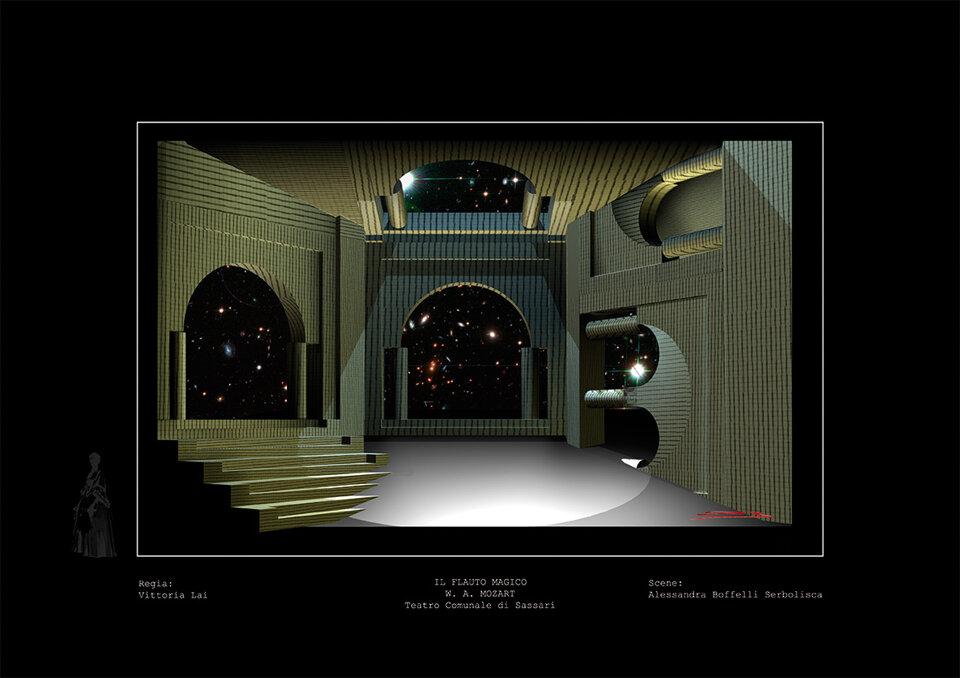
Il Flauto magico è un viaggio dalle tenebre alla luce, dalla notte al giorno, secondo la lettura onirica. La scatola scenica è una sorta di piramide sprofondata, in un ambiente surreale, come una grande gabbia che racchiuda le emozioni più nascoste di Tamino: deve rappresentare prospettive sfalsate, e dare il senso di instabilità. La scatola avrà molti elementi mobili, comprese le intere pareti, sia per consentire una illuminazione dai tre punti, laterali che superiore, sia per permettere l’ingresso dei personaggi: gli alberi della scena del bosco, la gabbia di Tamino, le stelle del cielo per l’aria della Regina, il cielo dei tre genietti… ecc.
Design sketches for the master's thesis with the direction of Victoria Lai.
The directorial interpretation starts from the idea of thinking about the story as a dream of Tamino, a young man of our times, which (at the end overture) returns home accompanied by Papageno, takes to his bed, and falls asleep. The Magic Flute is a journey from darkness to light, from night to day, according to the reading of dreams.
The stage box is a kind of pyramid sunk in a surreal environment, such as a large cage that encloses the hidden feelings of Tamino: perspectives should be staggered, and give a sense of instability. The box will have many moving parts, including entire walls, and to allow illumination from three-point 2 lateral and from above, and to allow the entry of characters: the trees of the forest scene, the cage of Tamino, the stars of heaven the air of the Queen, the sky of the three geniuses ... etc..